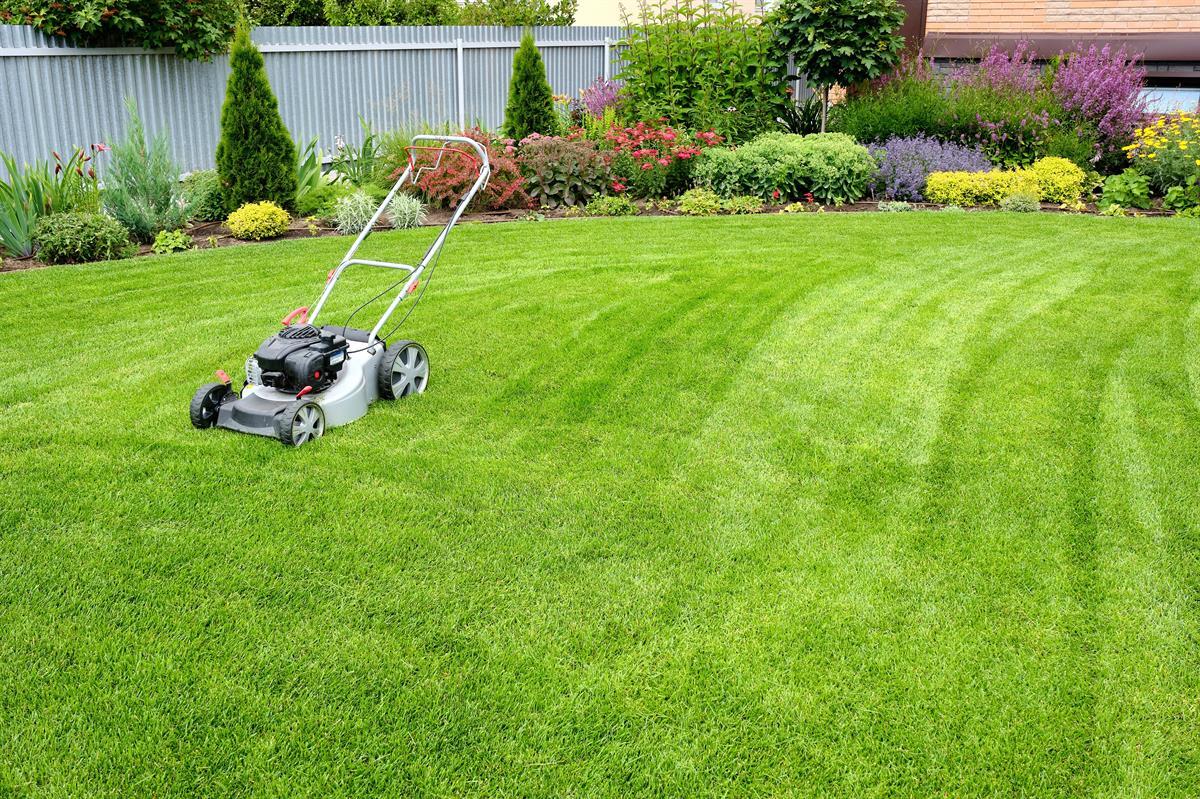
Healthy-lawn signs
- Grass is reasonably dense rather than thin with large bare areas.
- Color is appropriate for the grass species and season—not necessarily the darkest possible green.
- Roots hold the turf together and extend into the soil.
- Water soaks in instead of routinely puddling or running off.
- The lawn recovers after normal foot traffic.
- Weeds, insects and disease are not taking over large areas.
How long should the grass be?
There is no single correct mowing height for every lawn. The right height depends on grass species, season and climate. Identify your turf type and use local extension or turf guidance for its recommended range. In general, avoid scalping the lawn and avoid removing too much leaf blade in one mowing.
Why mowing too short can hurt
Repeatedly cutting below the appropriate range can reduce leaf area, stress roots, expose soil to heat and make it easier for weeds to gain ground. During heat or drought, a somewhat taller canopy can help shade the soil.
Should you mulch the clippings?
Often, yes. A mulching mower chops normal clippings finely and returns them to the turf, where they break down. Mulching works best when the lawn is dry enough to mow and you are not removing an excessive amount at once.
When to bag instead
Consider collecting clippings when grass is excessively long or wet and would form heavy clumps, or when you are managing certain lawn diseases or weeds with mature seed heads. Follow local disposal rules.
Check the lawn below the surface
If the lawn struggles despite good mowing, inspect soil compaction, drainage, sunlight, irrigation coverage and thatch. Soil testing can help identify pH and nutrient needs before fertilizer is added blindly.